
On The Diet - Part Two
Key areas where weight could be quite easily be lost out of the boat (plus help to lighten the ends and lower the centre of gravity) were the fore and aft decks. These were made from a sandwich consisting of double layers of chopped strand glass over a core mat filler. Very heavy, but when this boat was built originally, the minimum weight of a Finn was way higher then currently allowed. The foredeck, when modified in the original rebuild, was over engineered with way more scantlings then required.
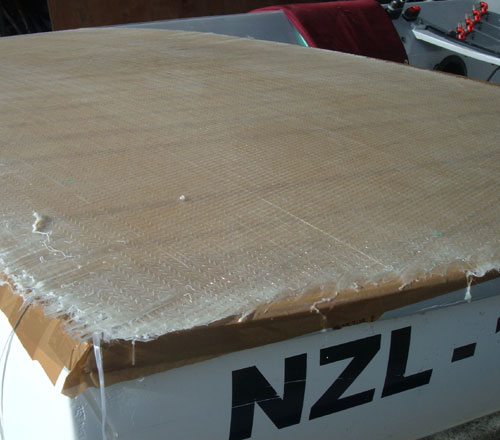
The new fore and aft decks were laid up on the old decks using packaging tape as the barrier between old and new. Layup
was a single layer of 850gram quad axis cloth. As the cloth is so
flexible when cured, it could quite easily have been
layed up on a flat board. No wonder modern boats can be built so light. The technology available back in the early days
was chopped strand mat and single bias woven cloth.
Once the old decks were cut away (fore deck weight 5.2
kg, rear deck 2.1 kg), new scantlings were made up to support the decks. These were made from 3mm plywood in
"T" configuration, their light weight belying the stiffness of the section.
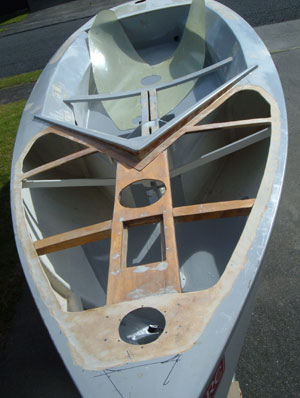
The centre console containing the top mast bearing slide support was constructed from a monoque of 3mm plywood. Fore
deck aft scantling was the existing cedar centrecase support structure.
New fore deck laying in the cockpit
shows the inbuild flexibility of the quad axis cloth layup.
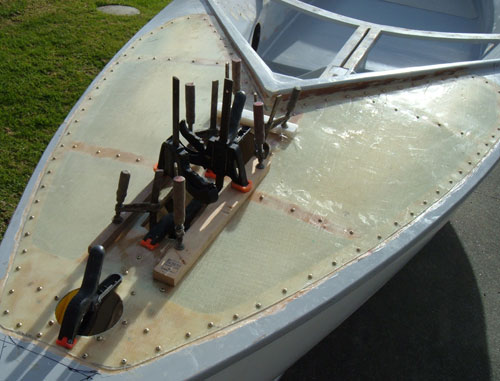
New deck was clamped and temporarily screwed
onto the boat whilst the glue set. Joint between old and new then filled and glassed.
Completed light
weight decks filled and faired ready for painting
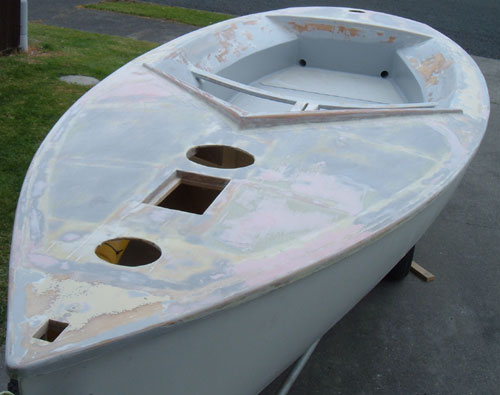
Total weight saving for the fore deck was 3.2 kg and 1.3kg for the aft deck. More weight savings to come by paying
attention to all the "little" bits and pieces.
View On The Diet - Part Three
